From the Director
On
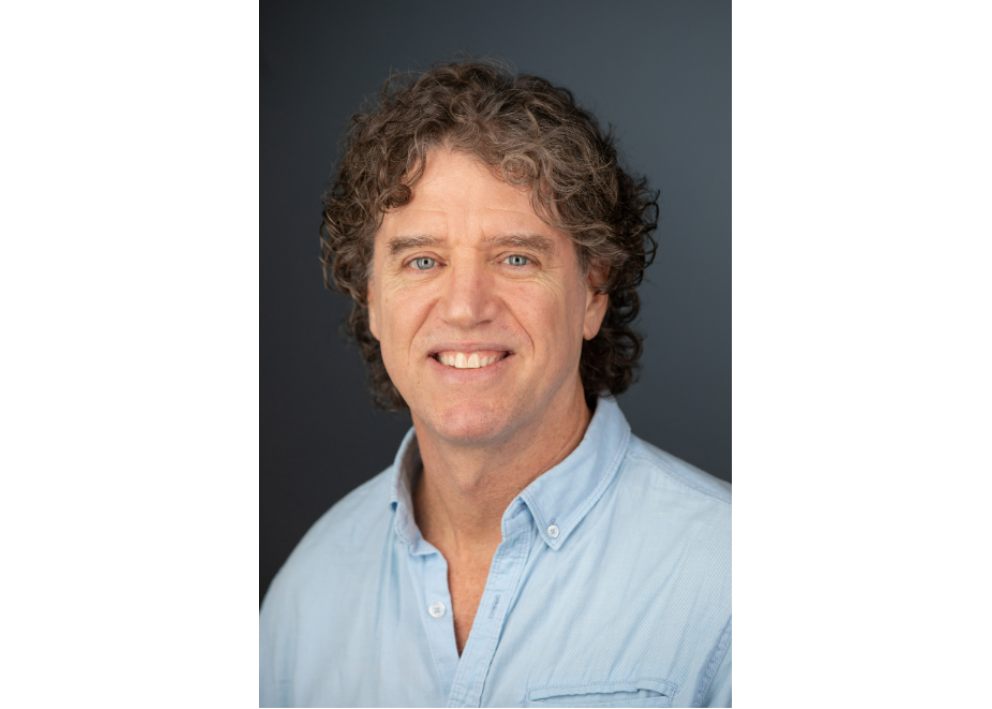
From the Director’s Desk…
What was supposed to be a standard year of activities, compared to the overlapping double NRC, FLAS, and Tinker grant years of 2022-24, resulted in a storm of funding insecurity and bureaucratic entanglements. In March, the Trump administration abruptly fired the entire international education staff in the Department of Education, which managed the NRC, FLAS, and Fulbright-Hayes. This disrupted many travel abroad plans and programming. We heard nothing until a month and a half later, when we were given a new Program Officer. We heard many of your concerns about federal attacks on education, science, medicine, former international allies, and immigrant workers, including at the Immigration Forum co-hosted by the Center for Global & International Studies (GIST) and CLACS on February 4. About 180 of you attended, and half of you signed a sheet to receive updates from the Center on the political turmoil. Since, other Centers around the country have advised us to lay low under the threat of political censorship that could endanger people on campus and in the greater community.
Fortunately, CLACS has an experienced, devoted, and adaptable staff who work well together and can weather the storm. Office manager Mariya Borisova has now been with us for over 3½ years. She has been invaluable in her ability to navigate the new KU Shared Service Centers accounting portal that has proven to be a 4-dimensional Rubick’s cube for me. If I only had a dollar for every hour I’ve spent in that labyrinth. The SSC staff take a deep breath (or hold their nose) whenever I submit receipts or payment requests. Mary Raple, now almost 2½ years in her position(s) as Assistant Director/Outreach Coordinator/FLAS & Tinker Manager/Communications Coordinator/ Student Worker Supervisor has settled in to the point that she can multitask in her sleep and juggle knives and torches while riding a unicycle. She’s tailored outreach activities to her expertise in teaching, including adding language and culture visits to local schools and juvenile detention facilities, all of which have been enthusiastically received. She has also spearheaded the move of all the KU Centers’ summer teacher training workshops to Kansas City, which have been a success regarding attendance and teacher engagement. Antonio Orozco has masterfully managed our FLAS competitions and the finances thereof, and he is gradually taking on greater organizational and financial responsibilities for our other grant reporting and competitions, relieving some pressure from Mary. Regarding student workers, unlike 2023-24 when we had to post multiple job ads just to hire two student workers, this past year we hired a fantastic 3-student team of Kae Santamaría-Sosa (undergraduate in Film & Media Studies), Mary Self (MA student in Latin American and Caribbean Studies), and David Martínez (PhD student in Education from Paraguay). With them, we have been able to catch up with tasks that have been sitting around for years, such as processing videos from past conferences and posting them on YouTube, as well as having a full slate of Merienda lunch lectures. Another key member of our team was Mercedes Velarde Acurio, a Fulbright Language Teaching Assistant from Cuzco who assisted Heaven Snyder in teaching Quechua and Mary Raple in several outreach events. Her knowledge and love of Quechua language and traditions were contagious and always met with enthusiasm. We are thrilled that her experiences here have led her to apply for KU Latin American & Caribbean Studies and Spanish & Portuguese MA programs, which she began in August.
Our instructors continued their success in attracting students from around the country and even the world to our Less Commonly Taught Language (LCTL) courses, making us the envy of the nation’s 17 Latin American Studies National Resource Centers. Emily Tummons recruits three times more students (12) per Kaqchikel Maya course than the average indigenous language course nationally, and Heaven attracts similar numbers for Yucatec Maya and Quechua. KU helped tremendously in this regard by letting us offer National Resource Center-funded courses tuition free. Moreover, having the FLAS ($38,000/year for graduates and $15,000 for undergraduates to take LCTL and area studies courses) was critical in keeping enrollments high. These included Quechua, Portuguese, Miskitu, Haitian Creole, Guaraní, and Me’phaa. The NRC grant also supported very successful study abroad courses to Costa Rica, Brazil, and Cuba, as you’ll see later in this report.
This past year we welcomed Peruvianist, Dr. Ryan Clasby, to our community, who was hired by the Spencer Art Museum to curate its Global Indigenous Art and Lifeways collections. Ryan is an archeologist who investigates ancient Amazonian and Andean trade and cultural exchange.
We received a record number (66) of graduate applications for our FLAS, Tinker, Stansifer, and Oppenheimer grants, and continued high application numbers from stellar undergraduates for the Herzfeld Study Abroad scholarship. Processing these applications was a huge task, and we could not have managed it without the devotion and expert assistance of our Graduate Committee – Director Rob Schwaller, Melissa Birch, Gary Reich, Luciano Tosta, Víctor González, Milton Machuca-Gálvez – and Undergraduate Committee – Director Araceli Masterson-Algar, Alcides Velásquez, Sofía Vera, and Mehrangiz Najafizadeh. Rob stepped down as Associate Director/Graduate Director after half a decade of generous service to take over the Chair of History, and we’re fortunate to replace him with Peter Herlihy, who was a transformative AD/Graduate Director in the late 2000s that established ongoing traditions. Over the summer we also replaced Melissa Birch, one of my key advisors, on the graduate committee with Ketty Wong. Last academic year we also welcomed Chris Anderson, Chris Brown, Bart Dean, Jorge Soberón to 3-year terms on the Executive Committee, relieving Mehrangiz Najafizadeh, Gary Reich, Richard Glor, and Melissa Birch from their generous, extended service.
On June 26-27, our Center, the Univ. of Arizona’s Center, the Univ. of Albany’s Department of African, Latin American, Caribbean, & Latinx Studies, and the Univ. de Costa Rica’s Centro de Investigación en Identidad y Cultura Latinoamericanas (CIICLA) co-organized the symposium, “Reflexiones sobre cinco siglos de colonialism en Centroamérica” at the Universidad de Costa Rica. We invited 14 indigenous and Afro-Central American leaders from all seven countries to speak about their groups in historical perspective, garnering points of view that are often sidelined in national discourses. For the leaders themselves, it was an opportunity to realize that they are not alone in the challenges they face and to discuss strategies. The presentations can be found here on YouTube with English subtitles, and we are currently processing them for an edited volume in Spanish. Our Center also contributed funding to several conferences and events on campus, including that of the international Nahuatl Scholars Association on April 24-26 organized by emeritus affiliated faculty, Dr. John “Fritz” Schwaller.
For the 2025-26 academic year, we are running on the fumes of the NRC and FLAS federal grants, as the entire international education office was cut by the Trump Administration. Our budgets consist only of carryover funds from previous years of those grants. This makes our endowment funds and Tinker block grant all the more important, and I am happy to report that KU International Affairs, in which our Center is now housed, has graciously provided 50% matching funds ($75,000) for a new Tinker 2026-30 grant award. This year with KUIA’s leadership we are conceptualizing the role of our Center in the post-NRC/FLAS era. Every change brings an opportunity!