International Symposium: “Reflexiones sobre cinco siglos de colonialismo en Centroamérica”
On
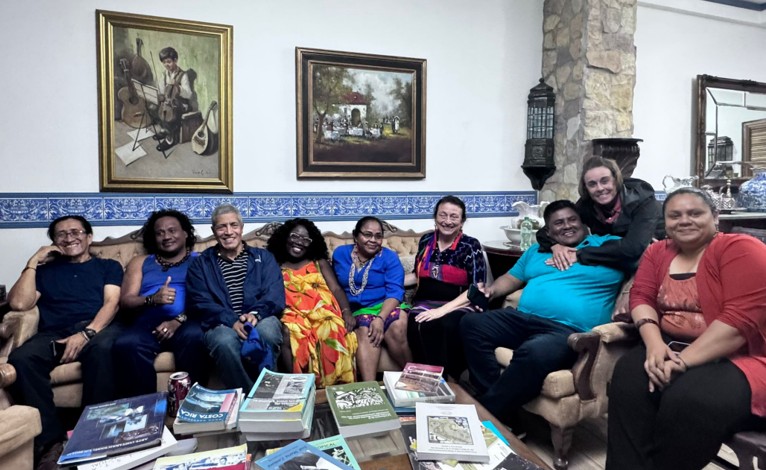
The KU Center for Latin American & Caribbean Studies, the Univ. of Arizona’s Center for Latin American Studies, the Univ. of Albany’s Department of African, Latin American, Caribbean, & Latinx Studies, and the Univ. de Costa Rica’s Centro de Investigación en Identidad y Cultura Latinoamericanas (CIICLA) co-hosted the symposium at the Universidad de Costa Rica (UCR) on June 26-27, 2025. The following indigenous and Afro-Central American leaders were invited to attend with all costs covered by our and the Univ. of Arizona’s NRC grants and KUIA’s KU-UCR Fund.
We intended to invite only 12 speakers, but the Nicaraguans were inexpensive because they were all refugees in San José. All presented tragic histories of oppression and territorial and cultural dispossession and instantly identified with each other in solidarity. Unfortunately, the Zoom interpretation function did not work, but we are currently processing the video-recordings to include English subtitles. The Univ. of Arizona is also providing funding for a bilingual edited volume. This will be a rare chance for the U.S. public, to whom we are ultimately accountable with our NRC programming, to hear about the conditions and perspectives of indigenous and Afro-Central American groups who are often sidelined in national discourses. For the leaders themselves, it was an opportunity to realize that they are not alone in the challenges they face and to discuss strategies.